Meet The Inspiring Indian Women Who led the Charge for Chandrayaan-2

Meet The Inspiring Indian Women Who led the Charge for Chandrayaan-2

Heartbreakingly close to success 500 metres or less to be precise Chandrayaan-2 united the entire country for a moment. Despite the lunar lander Vikram’s inability to complete the soft landing, the project will go down in history for more reasons than one. This mission was the first-ever Indian interplanetary project to be spearheaded by a woman, Muthayya Vanitha, who served as the project director. Meanwhile, Ritu Karidhal was appointed the mission director of Chandrayaan-2.

According to UIS (UNESCO Institute for Statistics) data, less than 30 per cent of the world’s researchers are women and though the number is increasing, the contribution of this mission towards encouraging and inspiring young women to literally reach for the stars and follow their dreams will be invaluable. Ahead, we meet the two women who have turned into space sensations overnight.

Women behind chandrayaan 2:

Muthayya Vanitha, project director for Chandrayaan-2


Born to a civil engineer and an electronics and communications engineer in Chennai, Muthayya Vanitha has worked at the India Space Research Organisation (ISRO) for 32 years now. Vanitha originally studied to be a design engineer, but her first job was at ISRO was that of the junior-most engineer. “I joined here as junior most engineer. So I worked in the lab, testing carts, making hardware, designing developing and then reached a managerial position,” she said in an NDTV interview. Later, she was appointed the project director of the telemetry and telecom divisions in the Digital Systems Group at ISRO Satellite Centre.

Before heading the historical mission, Vanitha has also worked as the deputy project director for TTC-baseband systems for Cartosat-1, Oceansat-2 and Megha-Tropiques satellites. However, when given the opportunity, she was reluctant to take up the role, revealed M Annadurai, former director, UR Rao Satellite Centre (URSC) in an interview with IANS. He further added, “I had to convince her and her husband. The task involved at least 18 hours of work daily and there was also the pressure of interacting with the top management on a daily basis as it was a prestigious mission.” She was also part of the team that worked on Mangalyaan, the successful mission to Mars in November 2013.

She was awarded the Best Woman Scientist Award of the Astronomical Society of India in 2006 for her work, and was also featured in the international scientific journal, Nature, in the list of scientists to watch out for in 2019.

Ritu Karidhal (Mission Director):


She is the mission director of Chandrayaan-2. Before this, she was also appointed as operations director of Mars Orbiter Mission. It was India’s first interplanetary mission.

Ritu Karidhal is fondly regarded as the "Rocket Woman" of India, as she was the deputy operations director for Mangalyaan in 2013-2014.

She's been there and done that, and now holds the mantle of Chandrayaan 2's mission director. She is working closely with Muthayya Vanitha throughout the Chandrayaan 2 mission, taking a prominent role once the spacecraft takes off from earth.It was her responsibility to design Chandrayaan 2's onward autonomy system -- which gives the spacecraft the ability to navigate its trajectory and respond to satellite with a relative degree of independence..

• Her job was to conceptualize and execute the craft's onward autonomy system, which operated the satellite’s functions independently in space and responded appropriately to malfunctions.
• Ritu Karidhal holds a master’s degree in the field of Aerospace Engineering from IISc.
• She has been working with ISRO since 1997. She has received ISRO Young Scientist Award from former president APJ Abdul Kalam in 2007.

Women Astronaut in Gaganyaan

ISRO is planning to send one woman astronaut, along with two others, to space under Gaganyaan Mission. VR Lalithambika, as head of the human space programme office, is helping in mission coordination and working with Human Space Flight Centre, the nodal centre for Gaganyaan mission led by its director S Unnikrishnan Nair.

Story behind Chandrayaan 2:

Key scientists and engineers involved in the development of Chandrayaan-2 include:

Ritu Karidhal – Mission Director
Muthayya Vanitha – Project Director
K. Kalpana – Associate Project Director
G. Narayanan – Associate Project Director
G. Nagesh – Project Director (former)
Chandrakanta Kumar – Deputy Project Director (Radio frequency systems)
Amitabh Singh – Deputy Project Director (Optical Payload Data Processing, SAC)

Vikram may have failed to land on the moon, but the sheer magnitude and daring of the Chandrayaan 2 project, which lost contact only 2.1 kilometres short of its target, is testament to the brilliance and determination of the 16,500 men and women behind India's most complex and ambitious space mission yet.

ISRO says that the Chandrayaan 2 mission was 90-95 percent successful
The primary mission of Chandrayaan-2 was to demonstrate the soft landing of the ‘Vikram’ lander on the South Pole of the Moon, operate the robotic rover Pragyan on the lunar surface, and get exciting images and data.

On September 7, during the last minutes of descent, the communication link snapped with Vikram when it was about 2.1 kms from the surface of the moon. After three days, the ISRO confirmed the sighting of Vikram through images beamed by the Orbiter.
ISRO Chief K Sivan said that the lander was in a tilted position and that it was not broken. Keeping alive hopes, he said that efforts are being made to restore link with the lander. The window of opportunity is said to be 14 days, which is one Lunar Day, and ends on September 21.

While it is a clear case of ‘so close, yet so far’ for the Indian space scientists, the ISRO claims that the mission was 90-95 percent successful, and this was also backed byMadhavan Nair, the former Chairman of the Indian space agency, who led Chandrayaan-1.

Now, let’s see the main components of the Chandrayaan-2 Mission. They are the Launch phase, the Orbiter phase and the Lander-Rover phase.

After initial hiccups with the launch, the ISRO achieved success when the GSLV MK-3 (Geosynchronous Satellite Launch Vehicle) propelled the payload into the destined orbit smoothly on July 22.

Next, it managed a series of neatly executed manoeuvres, all of which went smoothly, and the Orbiter reached the Moon’s orbit on August 20 as planned.

The third and crucial phase of the Soft Landing on the Moon turned into a hard landing.

Many achievements:
The space agency’s first moon mission, the Chandrayaan-1, was launched on October 22, 2008. The mission had two main components, the launch and the deployment of the Orbiter.

It used the PSLV (Polar Satellite Launch Vehicle) rocket, which had a record of successive launches.

Chandrayaan-1 functioned for 312 days, till August 2009. A major find of this mission was the discovery of traces of water molecules on the lunar surface.
In the decade leading up to the second moon mission, ISRO has seen many successes, like that of Mangalyan (Mars Orbiter Mission), the launch of a record of 103 satellites at one go using one PSLV launcher, the experimental reusable launch and other technological developments.

The big challenge was the GSLV, which had some mixed successes. The GSLV is crucial for India’s long-term engagement with outer space studies, and the launch of heavier satellites, for which the commercial market is huge.

Chandrayaan-2, is predominantly an ISRO venture. There is a presence of NASA in the mission, with the American space agency putting a Retroreflector, a laser-guided equipment which is part of the 14 payload experiments that the ISRO has contemplated.

Bouncing back
In this background, though the second shot at the Moon took a decade, the ISRO was well prepared.

Confidence was so high that for the launch on July 15, President Ramnath Kovind was invited. However, at the last hour of countdown, a glitch was observed and the mission was postponed. To ISRO’s credit, it showed boldness in postponing despite the President’s presence.

Moreover, it bounced back quickly to plug the leak issue and give a fresh date for July 22, exactly a week after.

The performance of the GSLV MK-3 was remarkable and it boosts India’s launch capabilities and interplanetary missions in future.

Given that the mission was highly complex and unique, with several key technologies involved and studying the entire Moon, the ISRO has done a commendable job in achieving success in two of the three phases, while almost succeeding in the final phase also.

Whether it is 95 per cent or two of the three phases of success, the organisation will surely go back to the drawing board and fix the issues. Its record, starting from the Satellite Launch Vehicle in 1979 to GSLV, has been commendable in bouncing back from failures by learning from them, and achieving mission success at highly competitive costs and improved performances.

Already, the Chandrayaan-2 Mission has achieved efficiencies in each phase, which has become beneficial by itself. The best example of this is the enhanced life of the Orbiter, which will last nearly 7 years, compared to the expected one year.

The ISRO’s next Chandrayaan Mission is at least five years away and it will be a joint venture with Japan says the Space Agency.

A truly global playground
The Indian mission to land on the South Pole has revived the interest in the Moon.

However, the capability to land on the Moon and send humans were demonstrated nearly 50 years ago. In the space race between the US and the erstwhile Soviet Union, the US stole a march with its Apollo 11 Mission, as part of which Neil Armstrong and Buzz Aldrin landed on the Moon on July 20, 1969.

The NASA driven Apollo Project from 1961- 1972 also saw 5 missions after Apollo 11 and a total of dozen men walking on the Moon. There were several failures too starting with a fire mishap in Apollo 1.

The Russians also had comparatively successful Lunar expeditions starting with the first landing by the spacecraft Luna 2 in September 1959.

The Chinese broke new ground by descending on the far side of the Moon on January 3, 2019 with the Chang 4 Spacecraft.

Israel suffered a failure in April 2019, when the spacecraft Bereshaft crashlanded.
ISRO Chandrayaan-2

Thanks for Visiting www.womenspage.in

Anandibai Gopalrao Joshi the first Indian female physician


Anandibai Gopalrao Joshi the first Indian female physician


Anandibai Gopalrao Joshi became first indian female physician in the year 1887.she was also the first indian woman who was trained in western medicine and the first woman to travel to the united states of america.

Born in 1865 in an extremely orthodox Brahmin family in Maharashtra, a 9 year old girl got married to a widower who was almost thrice her age. Sounds like a normal “old Indian saga”? Not really! The girl later on became the first Indian woman to qualify as a doctor. Even though she died at a very young age of 21, she opened the gates for many young women in India who wanted to do much more than devoting their entire life to household chores. Yes, we are talking about Anandi Gopal Joshi, India’s first lady to qualify as a doctor from the USA in 1886.

Gopalrao Joshi, Anandi’s liberal husband is one such person who stood by his wife’s side and acted as her biggest inspiration and push. Gopalrao, a postal clerk, was determined to educate his wife when she expressed her wish to study medicine at the age of 14, after losing their first child just 10 days after delivery because of unavailability of proper medical resources.

At a time when women’s education wasn’t taken seriously, Gopalrao appeared as a great exception. He had married Anandi on the condition that he should be permitted to educate the girl and that she should be willing to read and write.

Gopalrao started teaching Anandi how to read and write Marathi, English and Sanskrit. He also transferred himself to Calcutta to avoid direct interference of Anandi’s parents in her education.

Gopalrao was an obsessed man. One day, when she was found helping her grandmother in the kitchen, Gopalrao flew into an uncontrollable rage and beat the young girl with a bamboo stick. The neighbourhood was agog: husbands beat wives for not cooking but whoever had heard of a wife being beaten for cooking when she should have been reading.
Anandi gradually turned into a well-read intellectual girl. All this change took place in the face of stiff opposition from her parents, frequent bickering in the family and the stubborn attitude of her husband.

In 1880, he sent a letter to a well-known American missionary, Royal Wilder, stating his wife’s keenness to study medicine in America and if he would be able to help them. Wilder agreed to help the couple on the condition that they convert to Christianity. This proposition was not accepted by the Joshis.

Anandi Gopal Joshi applied to the Women's Medical College of Pennsylvania and was granted admission. She traveled to from Calcutta (present day Kolkata) to New York by ship. She began her medical training at the age of nineteen. While in America, her health, which was already not a hundred per cent from her days in India, further deteriorated due to the cold weather and unfamiliar diet. She even went on to suffer tuberculosis or TB. Despite all that, she stayed motivated to complete her MD in medicine. Her journey had been so inspiring that she got much publicity in the Indian press, and on her graduation, the then Queen of England, Empress of India, Queen Victoria sent her a congratulatory message. She had become the first woman of Indian origin to study and graduate with a degree in medicine in the United States. Anandi Gopal Joshi went on to inspire generations of women to pursue their higher education.

When she returned to India in 1886, she received a grand welcome, and was appointed as the physician-in-charge at the Albert Edward Hospital in the then princely state of Kolhapur (in present day Maharashtra).

On February 26, 1887, just over a month before her 22nd birthday, Anandi Gopal Joshi died of tuberculosis or TB. Her dream of opening her own medical college for women was left unfulfilled. Her death made headlines across India and the entire nation mourned her passing. As a mark of respect, her ashes were placed in a cemetery in Poughkeepsie in New York.

In her honour, the Institute for Research and Documentation in Social Sciences or IRDS, an NGO from Lucknow, still awards the 'Anandibai Joshi Award for Medicine' in honour of her early contributions to the cause of advancing medical science in India. Even the Government of Maharashtra established a fellowship in Anandi Gopal Joshi's name.

Wilder extended his help by writing about it in a local paper, and Theodocia Carpenter, a rich American from New Jersey, saw the articles, and offered to help Anandi as she was impressed by the earnestness and keenness of Anandi to study medicine.

In the meanwhile, Anandi’s health was constantly declining. She suffered from weakness, constant headaches, occasional fever, and, sometimes, breathlessness. Initially reluctant to go abroad due to her bad health, Anandi eventually agreed after much persuasion from her husband and started studying medicine in Women’s Medical College of Pennsylvania (now known as Drexel University College of Medicine) at the age of 19 and got her M.D. degree in 1886. On her graduation, Queen Victoria sent her a congratulatory message. She completed her thesis on obstetric practices among the ancient Hindus.

Anandi’s extract from her letter of application to WMCP says,

“[The] determination which has brought me to your country against the combined opposition of my friends and caste ought to go a long way towards helping me to carry out the purpose for which I came, i.e. is to render to my poor suffering country women the true medical aid they so sadly stand in need of and which they would rather die than accept at the hands of a male physician. The voice of humanity is with me and I must not fail. My soul is moved to help the many who cannot help themselves,” (Source)

Anandi was already ill with the first symptoms of the tuberculosis that would ultimately kill her. Her health worsened when she returned to India in 1886. She received a grand welcome and The princely state of Kolhapur appointed her as the physician-in-charge of the female ward of the local Albert Edward Hospital.

Anandi received a letter from Lokmanya Tilak, Editor “Kesari”, saying, inter alia,

“I know how in the face of all the difficulties you went to a foreign country and acquired knowledge with such diligence. You are one of the greatest women of our modern era. It came to my knowledge that you need money desperately. I am a newspaper editor. I do not have a large income. Even then I wish to give you one hundred rupees.”

Anandi died a few days after it. She passed away on 26th February 1887, a month before turning 22. Her ashes were sent to Mrs. Carpenter, her host in America who placed them in her family cemetery near New York.

Caroline Wells Healey Dall wrote Anandibai biography in 1888. Doordarshan aired a Hindi serial named “Anandi Gopal” based on Anandibai life. (Kamlakar Sarang directed the serial.) Shrikrishna Janardan Joshi wrote a fictionalized account of Anandabai ‘s life in his Marathi novel Anandi Gopal. (The novel has been translated in an abridged form in English by Asha Damle.) It has also been adapted into a play of the same name by Ram G. Joglekar.

Institute for Research and Documentation in Social Sciences (IRDS), a Non-governmental organization from Lucknow has been awarding the Anandibai Joshi award for Medicine in reverence to her early contributions to the cause of Medical sciences in India.

In a time when a women’s position was not even considered in the society and their education was unthinkable, Anandi took a bold step to fight and go against the flow to become a doctor. This was possible because of a big supporting hand from her husband Gopalrao who never let her quit and always inspired her to do more.

When some parts of India still deal with unsupportive husbands and a society that thinks a woman’s place is inside the house, the story of the couple is a fresh change. We don’t know if Gopalrao was too harsh on his wife and whether his obsession was justified. All we can say is his support for women’s education and their empowerment was remarkable for the time he lived in.

Though she could not convert her degree into a successful profession due to her untimely death, Anandibai surely left a mark on India’s heart and contributed to a much better, and bolder, India.

Here are five things you should know about the pioneering medic:

She was motivated to study medicine by her baby’s death:

Joshi was married at the age of just nine, as was common in 19th century India, to a man 20 years older than her.

She gave birth to their first child when she was 14, but her baby son died 10 days later due to a lack of medical care for women. This spurred Joshi to pursue an interest in medicine so she could “help the many who cannot help themselves”, as she later put it in her college application.

Her husband Gopalrao Joshi, a postal clerk, encouraged her ambition and helped to teach her to read and write.

She defied cultural expectations and ill health to qualify as a doctor:

While she was supported by her husband, Joshi’s ambitions were condemned by the orthodox Hindu community, who threatened her with excommunication.

Despite that, she travelled to New York in 1883, chaperoned by  two English acquaintances of a doctor friend. After arriving in America, she wrote to the Women’s Medical College of Pennsylvania to ask for a place on their medical programme, one of the first in the world that accepted women. In her application she admitted her credentials may fall below the college’s usual requirements but pleaded for them to make an exception “to render to my poor suffering country women the true medical aid they so sadly stand in need”.

She was awarded a place, and studied her two-year diploma alongside two of the first female medical students from Japan and Syria. Despite suffering ill health throughout her studies, she graduated on 11 March, 1885.

She was congratulated by Queen Victoria:

After Joshi was awarded her degree in medicine, the college’s dean wrote of her achievement to Queen Victoria, who was also Empress of India. Victoria reportedly wrote a congratulatory message in response. Joshi received a grand welcome upon her return to India, where the editor of the Kesari newspaper hailed her as ”one of the greatest women of our modern era”.

Her life was tragically cut short:

Returning to India in 1886, Joshi was appointed the physician in charge of the women’s ward at Albert Edward Hospital in Kolhapur. She dreamed of opening a medical college for women, but was an ambition she never got to realise. She died of tuberculosis on 26 February, 1887, before she had even begun practising medicine. She was just 21.

There is a crater in Venus named after her:

Joshi is one of a number of notable women who have lent their names to sizeable impact craters on Venus. The 34 km diameter crater “Joshee” lies at latitude 5.5° N and longitude 288.8° E. It was named in 1997 by the International Astronomical Union.

Thanks for Visiting www.womenspage.in

Redbus Coupons Offers June 2014

Redbus Coupons Offers June 2014
Bus Ticket Offer - June
PayU Money cash back offer - Terms & Conditions:
10% off on any transaction maximum up to Rs. 50.
Pilani Soft Labs Pvt. Ltd. reserves the right to end any or all offers at its discretion without any prior notice.
All disputes are subject to Bangalore jurisdiction
Citrus wallet cash back offer - Terms & Conditions:
15% cash back subject to a maximum of Rs. 50
Offer applicable for up to 3 transactions in a month.
Pilani Soft Labs Pvt. Ltd. reserves the right to end any or all offers at its discretion without any prior notice.
All disputes are subject to Bangalore jurisdiction
Mobikwik cash back offer - Terms & Conditions:
5% Cashback on using mobikwik wallet for a maximum of Rs. 50 per transaction
A customer can use this offer multiple times
Cannot be clubbed with any other offer on redBus.in
Offer expires on November 1, 2014
This offer has been provided by Mobikwik and redBus cannot be held responsible for the offer
All disputes to be settled with Mobikwik directly

iOS 8 New Features For Your iPhone and iPad
Thanks for Visiting www.womenspage.in

Female Writers Poetess from AndhraPradesh

Female Writers Poetess from AndhraPradesh 


Gangadevi
Gangadevi (14th Century) was the daughter of Kakatiyas and the daughter-in-law of the Vijayanagara Dynasti founded by Bukkarayalu and Harihara Rayalu. She was the wife of Kamaparayalu, the third son of Bukkarayalu. The rulers of both Kaktiya and Vijayanagar dynasties are indigenous Telugu communities. She wrote the true story of her husband's victory over Muslims in Madhura, entitled "Madhura Vijayamu." This Kavyamu (poem) is also known as "Veerakamparaya Charitramu," and contains 8 chapters.
.
Tallapaka Timmakka
Tallapaka Timmakka (15th Century) was the first woman to write in Telugu. She was the first wife of Tallapaka Annamacharya. Tallapaka family was a Brahmin family. She wrote Subhadhraklyaanamu in Telugu, a poem of 1170 verses. Although Arjuna of Mahabharat of North India was the hero of the story, she reenacted the story with Telugu culture, customs, sensuality and Telugu places.
.
Atukuri Molla
Molla (16th Century) was born into Atukuri family, a Kummari (potter) caste/tribe family. She wrote Ramayanamu in Telugu. This work is also known as Molla Ramayanamu. She used simple Telugu instead of Sanskrit.
.
Tirumalamba
Tirumalamba wrote "varadambica parinayamu," the story of marrriage of Achyuta Devarayalu, in Sanskrit language.
.
Leelavati
She was the daughter of a Brahmin mathematics professor Bhaskaracharya. She wrote a text of mathematics called "leelavati ganitamu' in Sanskrit.
.
Triveni
Triveni is the daughter of Udayendrapuram Anatacharyulu and the wife of Prativadibhayankaram Venkatacharyulu. Her contributions include unpublished Lakshminadha Sahasramu, Ranganadha Sahasramu, Srirangabhydayamu, Tatvamudra bhadrodayamu, Sukasandesamu, Bhrungasandesamu etc. in Sanskrit language.
.
Madhuravani
Madhuravani's original name was Sukavani. She was a court poetess of King Raghunadha. She translated Raghunadha's Telugu Ramayanamu into Sanksrit. However, only part of this Sanskrit "Ramayana sarakavya tilakamu" is available.
.
Rangajamma
Ranagajamma, also known as Rangaji, was the daughter of Pasupuleti Mangamamba and Venkatadri. She is a wife (or concubine) and a court poetess of King Vijayaraghava (17th century). She is considered to belong to a Vesya (concubine) community. However, these Vesyas were highly respected and weilded lot of power and social status in the Telugu country. Her contributions include Mannaru Dasavilasamau.
.
Muddupalani
Muddupalani was a court poetess and a concubine of Marathi King Pratapasimha (18th century). Her father was Mutyalu and mother was Potiboti. She wrote sensual poetry called 'Radhika Santvanamu' to prove that women can write lust and sex as well as or even better than men! Being a Vesya (concubine or prostitute) it was notdifficult for her to write about lust and sex. Her poetry is considered sweet, in which she uses a lot of popular sayings and proverbs effectively.
.
Tarigonda Venkamamba
Tarigonda Venkamamba (19th century) has a special place in Telugu women writers. She was a child widow. Child marriages (with old men ready to die) were common in 19th century. She was born into a family of Nandavareeks sect of Brahmin tribe/caste. Her father was Krishnayamatya and mother was Mangamamba. Her teacher was Prof.
Subrahmnayudu. Her poetic contributions include Venkatachala Mahatmyamu, Vasista Ramamyanamu, Rajayogasaramu, Bhagavatamu, Krishnamanjari. Almost all of her writings are devotional, religious and philosophical.
.
Kotikalapudi Seetamma
Kotikalapudi Seetamma (late 19th and early 20th century) was a follower of Kandukuri Veeresalingamu Pantulu. Her contributions include Ahalyabai, Sadhuraksha Satakamu, Bhaktimargamu, Satidharmamu etc. She presided over the first Telugu Women Writer's meeting called Pradhamandhra Mahilasabha in Bapatla in 1913.
.
Other Women Writers
Some other famous 19th century women are: Bhandaru Achchamamba, Burra Suramamba, emuri Saradamba, Mamidanna Subhadhramma, Seeramu Subhadhrayamma, Avadhoota Gnanamaba, Jooloori Tulasamma, etc.
.
Later writers include:
Chilakapati Seetamba, Chebrolu Saraswatidevi, Chilakapati Seetamba, Gudipudi Indumatidevi, Burra Kamaladevi,Sthanapati Rukminamma, Ganti Krishnavenamma, Dronamraju Lakshmibayamma, Kanaparti Varalakshmamma, Somaraju Indumatidevi, Chavaqli Bangaramma, Pallapragada Viswasundaramma, KrottapalliLalita, Utukuri Lakshmikantamma, etc.
.
In the contemporary time (later part of the 20th century), a number of women novelists became popular: Jayanti Suramma, Pulugurti Laksjminaramamba, Seeramu Subhadramba, Kanaparti lakshminaramma,Illindala Saraswatidevi, Malati Chandoor, Lata, Muppalla Ranganayakamma, Vasireddi Seetadevi, Koddori Kousalyadevi,Yaddanapudi Sulochanarani, Binadevi, P. Anandaramam, Dvivedula Visalalkshi, D. Kameswari, Madireddi Sulochana, Ramalakshmi,Asalata, Parimala Someswar, etc.

Thanks for Visiting www.womenspage.in

Fun-filled celebration of International Women's Day at Badruka College, Hyderabad

 Fun-filled celebration of International Women's Day at Badruka College, Hyderabad

 Date - 09.03.2012
Time - 12 noon - 7 pm
Venue - Badruka College, Hyderabad

AGENDA:
Address by CARE India and Guest of Honor
Singing Competition
Dance Competition
Street Plays Competition
Band Performance
Sky Lanterns

ACTIVITIES:
Myth Corner
Minute to Win It
Pledge wall
Raise Your Hands wall


Thanks for Visiting www.womenspage.in

Khwaish Women's Day 2014 Special Exhibition, Hyderabad

 Khwaish Women's Day 2014 Special Exhibition, Hyderabad


MANY WOMEN ACHIEVER'S OF HYDERABAD ARE HONOURED AT A SPECIAL CEREMONY CELEBRATING WOMANHOOD AT THE KHWAAISH EXHIBITION ON OCCASION OF WOMAN’S DAY.
VARIOUS DESIGNERS COME TOGETHER TO EXHIBIT THEIR CLOTHES, JEWELLERY, SHOES, HOME FURNISHINGS, ACCESSORIES & HOME DECOR ACROSS INDIA. RICHFEEL & PARIS DE SALON PAMPERS THE WOMEN TO SALUTE THE SPIRIT OF WOMANHOOD.
KHWAISH EXHIBITION & SALE A ONE STOP FASHION DESTINATION IS FEATURING AT TAJ KRISHNA FROM 7TH (FRIDAY) TO 8TH (SATURDAY) MARCH 2014.

Thanks for Visiting www.womenspage.in

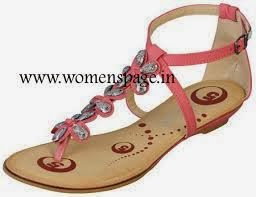
latest shoes for women,latest shoes for winter,latest shoes for ladies,casual shoes for women,women's autumn shoes

 These are the latest trend shoes,sandals,Metallic Lines Platform Heels,Strong Point Ankle Strap Heels,Laser Cut-Out Heels,Gilded Perfection Platform Heels,On The Edge Platform Pumps.


Thanks for Visiting www.womenspage.in

why do we celebrate women's day,why do we celebrate women's day on 8th march,why we celebrate women's day on 8th march

International Women's Day (IWD), originally called International Working Women's Day On   8 March 1857, women working in clothing and textile factories (called 'garment workers') in New York City, in the United States, staged a protest. They were fighting against inhumane working conditions and low wages. The police attacked the protestors and dispersed them. Two years later, again in March, these women formed their first labour union to try and protect themselves and gain some basic rights in the workplace.
On 8 March 1908, 15,000 women marched through New York City demanding shorter work hours, better pay, voting rights and an end to child labour. They adopted the slogan "Bread and Roses", with bread symbolizing economic security and roses a better quality of life. In May, the Socialist Party of America designated the last Sunday in February for the observance of National Women's Day.
Following the declaration of the Socialist Party of America, the first ever National Woman's Day was celebrated in the United States on 28 February 1909. Women continued to celebrate it on the last Sunday of that month through 1913.

1996 Celebrating the Past, Planning for the Future
1997 Women and the Peace Table
1998 Women and Human Rights
1999 World Free of Violence Against Women
2000 Women Uniting for Peace
2001 Women and Peace: Women Managing Conflicts
2002 Afghan Women Today: Realities and Opportunities
2003 Gender Equality and the Millennium Development Goals
2004 Women and HIV/AIDS
2005 Gender Equality Beyond 2005; Building a More Secure Future
2006 Women in Decision-making
2007 Ending Impunity for Violence Against Women and Girls
2008 Investing in Women and Girls
2009 Women and Men United to End Violence Against Women and Girls
2010 Equal Rights, Equal Opportunities: Progress for All
2011 Equal Access to Education, Training, and Science and Technology: Pathway to Decent Work for Women
2012 Empower Rural Women, End Poverty and Hunger
2013 A Promise is a Promise: Time for Action to End Violence Against Women
2014 Equality for Women is Progress for All

Thanks for Visiting www.womenspage.in

 
Design by Free Interview Questions | Bloggerized by Lasantha - Premium Blogger Themes | Press Release Distribution